Cricket Net Safety Checklist for Players, Coaches and Clubs
A practical cricket-net safety checklist covering lane inspection, backstop netting, protective equipment, bowling machines, juniors and session control.
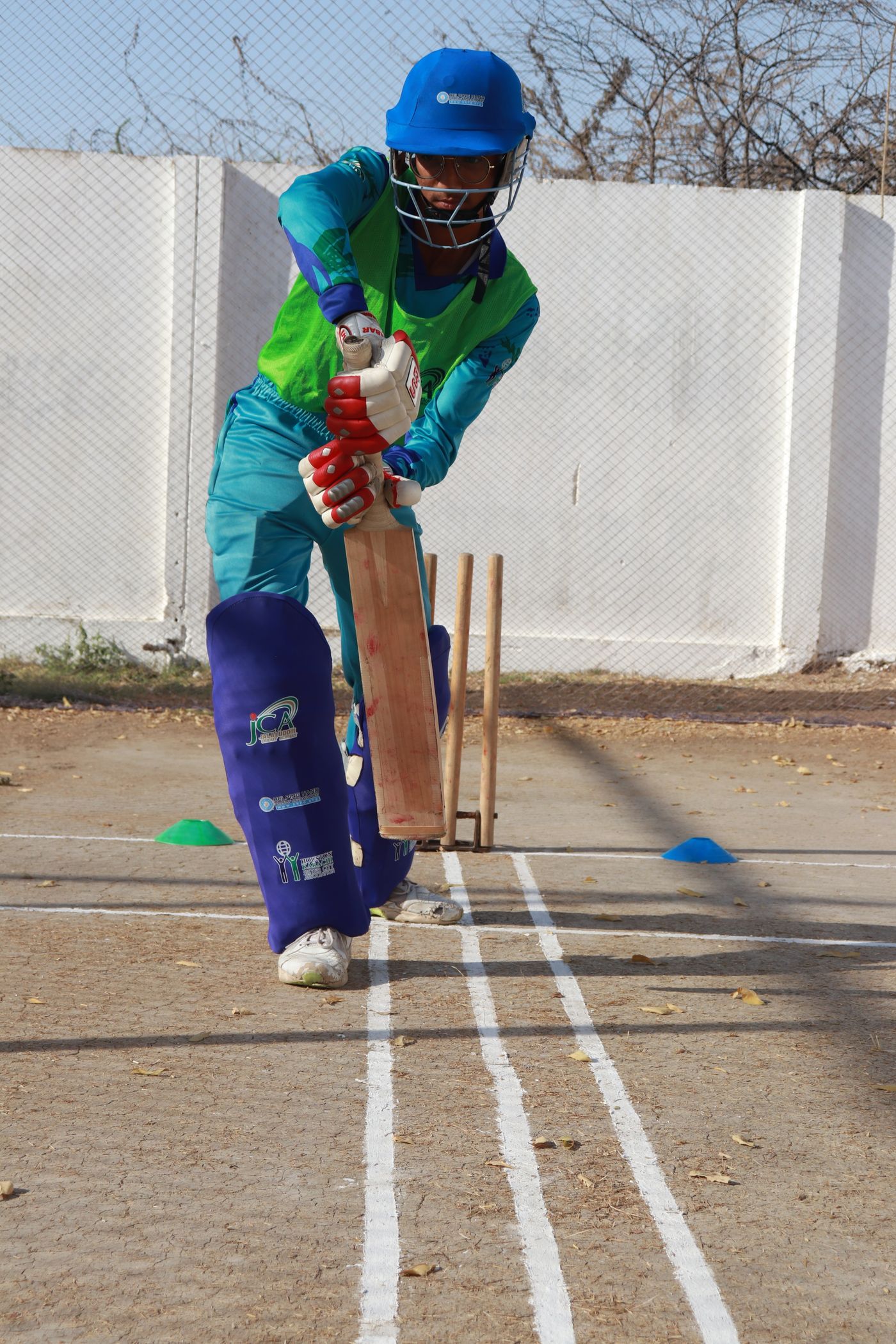
Before a cricket net opens, inspect the surface and netting, create a controlled entrance, keep waiting players out of ball-strike zones, and agree who controls each delivery. Hard-ball practice requires suitable protective equipment and competent supervision. Stop immediately if the surface becomes slippery, netting separates or people enter the lane unexpectedly.
Why net sessions need active control
A net contains the ball, but it does not remove the risk. The bowler, batter, wicketkeeper, feeders, coaches and people waiting nearby can all be exposed to balls moving at high speed. A safe session depends on the facility, the equipment and the way people use the lane.
The most useful habit is a short check before every session. Conditions change: a mat lifts, a side net separates, rain makes the run-up slippery, or a group leaves bags in the entrance. Treat the net as a working practice area, not a cage that is automatically safe.
The two-minute pre-session check
| Check | Safe condition | Stop or fix before starting if… |
|---|---|---|
| Playing surface | Level, dry, predictable and free of debris | It is wet, slippery, torn, raised or giving erratic bounce |
| Side netting | Fully drawn, secured and reaching the surface | There are gaps, holes or loose sections |
| Backstop netting | In place behind the batter | Balls can escape into a walkway or another activity area |
| Roof and lighting | Clear visibility through the full ball flight | Glare, darkness or low fittings hide the ball |
| Run-up | Clear, dry and long enough for the bowler | Bags, doors, people or surface changes obstruct it |
| Lane entrance | Controlled and visible | People can walk in without the session noticing |
| Equipment | Stable stumps, sound balls and suitable feeds | Bases rock, balls are damaged or a machine is unsecured |
| Emergency readiness | First-aid access and a charged phone | No responsible adult knows the emergency process |
The ECB’s recreational safety guidance says net surfaces should be level, smooth and consistent, and that worn, slippery or uneven lanes should not be used. It also recommends backstop netting for nets, throwdowns and fielding practice. Those principles travel well: if the facility cannot contain predictable ball movement, the drill needs to change or stop.
Control who can enter the lane
Use one entry point and keep it shut or clearly guarded while a ball is live. Waiting bowlers should line up behind the active bowler, not beside the batter or against a side net where a deflection can reach them.
Only the people needed for the drill should be inside the lane. Spectators, siblings and players preparing equipment belong outside the ball-strike area.
Agree a simple command system:
- Ready means the batter, keeper and feeder are watching.
- Ball means one delivery is about to begin.
- Stop cancels the delivery immediately.
Anyone should be able to call stop if a person enters, a ball comes from another lane, equipment moves or visibility is lost.
One ball live at a time
Loose balls are a common source of avoidable risk. Keep the basket behind the feeder or bowler and away from feet. Retrieve balls only when the lane is stopped.
Do not allow a second bowler to begin while the first ball is still being returned. In multi-lane facilities, check that balls cannot pass under or through divider nets.
For fielding drills outside a lane, establish a separate hitting direction and a protected waiting zone. Backstop netting is useful for throwdowns and hit-ups as well as conventional nets.
Protective equipment for hard-ball practice
The required equipment depends on the player’s role, age, the ball and the speed of the drill. A hard ball creates a materially different risk from a purpose-made soft training ball.
For hard-ball batting, the usual protective system includes:
- a properly fitted cricket helmet with faceguard
- batting gloves
- batting pads
- an abdominal or pelvic protector as appropriate
- additional thigh, arm or chest protection where the player and drill require it
- secure footwear suited to the surface
The player must still be able to see, move and run safely. A helmet that rocks, exposes the face or has an altered gap is not made safe by tightening it at the last second. Read our helmet replacement guide for damage and age checks.
For New Zealand players who want a starting point before trying on a helmet, the NZ Cricket Store helmet size calculator can narrow the likely size. It does not replace the manufacturer’s instructions, the applicable safety standard or a hands-on fit check.
Wicketkeepers standing up to the stumps and close fielders need role-specific head and body protection. Coaches should apply the competition’s rules and the governing body’s current safety policy, especially for juniors.
Moving from soft ball to hard ball
New Zealand Cricket’s Transition to Hard Ball coaching material treats confidence and familiarity with protective equipment as essential. Progress the player; do not simply swap the ball.
A sensible progression might be:
- stationary feeds with a soft ball
- underarm or short controlled feeds
- a firmer training ball at agreed speed
- controlled hard-ball feeds with full protective equipment
- bowling from a shortened approach
- normal net bowling only when technique and confidence are ready
Move back a step if the player turns away, freezes, loses sight of the ball or cannot maintain a stable position. More speed is not automatically better practice.
Our cricket ball sizes and weights guide explains the current official ball specifications. For a junior match, the competition’s playing conditions decide which ball is correct.
Bowling-machine safety
A bowling machine adds consistent pace but also introduces mechanical and communication risks.
Before use:
- follow the machine manufacturer’s setup and operating instructions
- inspect power leads, guards, wheels and the stand
- anchor or stabilise the machine as specified
- use only balls approved for that machine
- keep the operator behind any protective screen supplied for the task
- point the machine safely while testing line and length
- give the batter trial deliveries at a lower setting
The operator controls the ball. No one should load a delivery until the batter is set and has acknowledged readiness. Stop and isolate the machine before clearing a jam, moving it or entering its delivery path.
Do not mix ball types mid-session without retesting. Different wear, seam height or compression can change the line, length and speed produced by the same settings.
Throwdowns and sidearms
Throwdowns can be faster and less predictable than they look. The feeder needs a stable position, a clear release zone and enough distance for the drill. Use a protective screen where appropriate.
With sidearm devices, the feeder should be competent with the tool before increasing pace. Begin with an empty or low-speed rehearsal, then controlled deliveries. Never stand unprotected in the likely return path of a driven ball.
If a coach moves closer for a technical drill, reduce ball hardness and pace accordingly. Distance, ball type and protective equipment should work as one risk-control system.
Bowlers, queues and workloads
Mark a safe waiting line behind the active bowler. Bowlers returning to the queue should walk outside the run-up, not across it. Keep drinks and kit bags away from the approach.
A good net is not a licence to ignore workload. Plan spell length, recovery and total deliveries for the player’s age, preparation and current governing-body guidance. Count all relevant bowling, including hard and soft balls where the policy requires it.
Watch for fatigue changing the run-up, front-foot landing or control. Stop the spell if the bowler reports pain, dizziness or an injury concern.
Junior-session controls
Junior nets need visible adult responsibility. Assign one coach to each active lane or reduce the activity so the available adults can supervise it properly.
Use clear group roles: active batter, active bowler, keeper or collector, and waiting zone. Avoid a large queue with no task; distracted players are more likely to cross into a live lane.
Check protective equipment before the child reaches the crease. The complete CricketWise size guide links to the relevant bat, glove, pad, helmet and shoe tools, but a responsible adult should confirm final fit and condition.
What to do after a ball strike
Stop the lane. Do not rush the player back into practice because they say they are fine immediately after impact.
Follow the organisation’s first-aid and concussion process. A blow to the head, face or neck needs particular care. If there is any concern about consciousness, confusion, worsening symptoms, neck injury or severe pain, seek urgent medical help.
Quarantine damaged protective equipment until it has been assessed against the maker’s instructions. A helmet involved in a significant impact may need replacement even if the shell does not look dramatic.
Record the incident and the condition that contributed to it. The point is not paperwork for its own sake; it is to prevent the same event in the next session.
Closing the lane
At the end of the session:
- collect every ball before retracting netting
- remove broken or badly worn balls from the practice basket
- report holes, loose anchors, lighting failures and surface damage
- dry shared protective equipment before storage
- isolate faulty machines or electrical equipment
- leave entrances and emergency routes clear
Do not assume someone else reported the defect. Label or block an unsafe lane so the next group cannot unknowingly open it.
Printable net-session checklist
- Surface dry, level and predictable
- Side and backstop netting secure
- Run-up and exits clear
- One controlled lane entrance
- Waiting players in a protected zone
- One ball live at a time
- Stumps and bases stable
- Batter and keeper correctly equipped
- Ball type and drill speed appropriate
- Machine or feeder controlled by a competent person
- Stop command agreed
- First-aid and emergency plan known
- Defects and incidents recorded after the session
Sources and further reading
- ECB Recreational Cricket Safety Guidelines, December 2025
- ECB Recreational Cricket Safety Regulations
- New Zealand Cricket: Transition to Hard Ball coaching manual
These resources come from different governing contexts. Apply the rules and policies that govern your competition, club, school and facility.