Cricket Sunglasses Guide: Lens Tint, UV Protection and Fit
Choose cricket sunglasses for UV protection, glare control, secure fit and clear ball tracking, with practical lens, frame, junior and care checks.
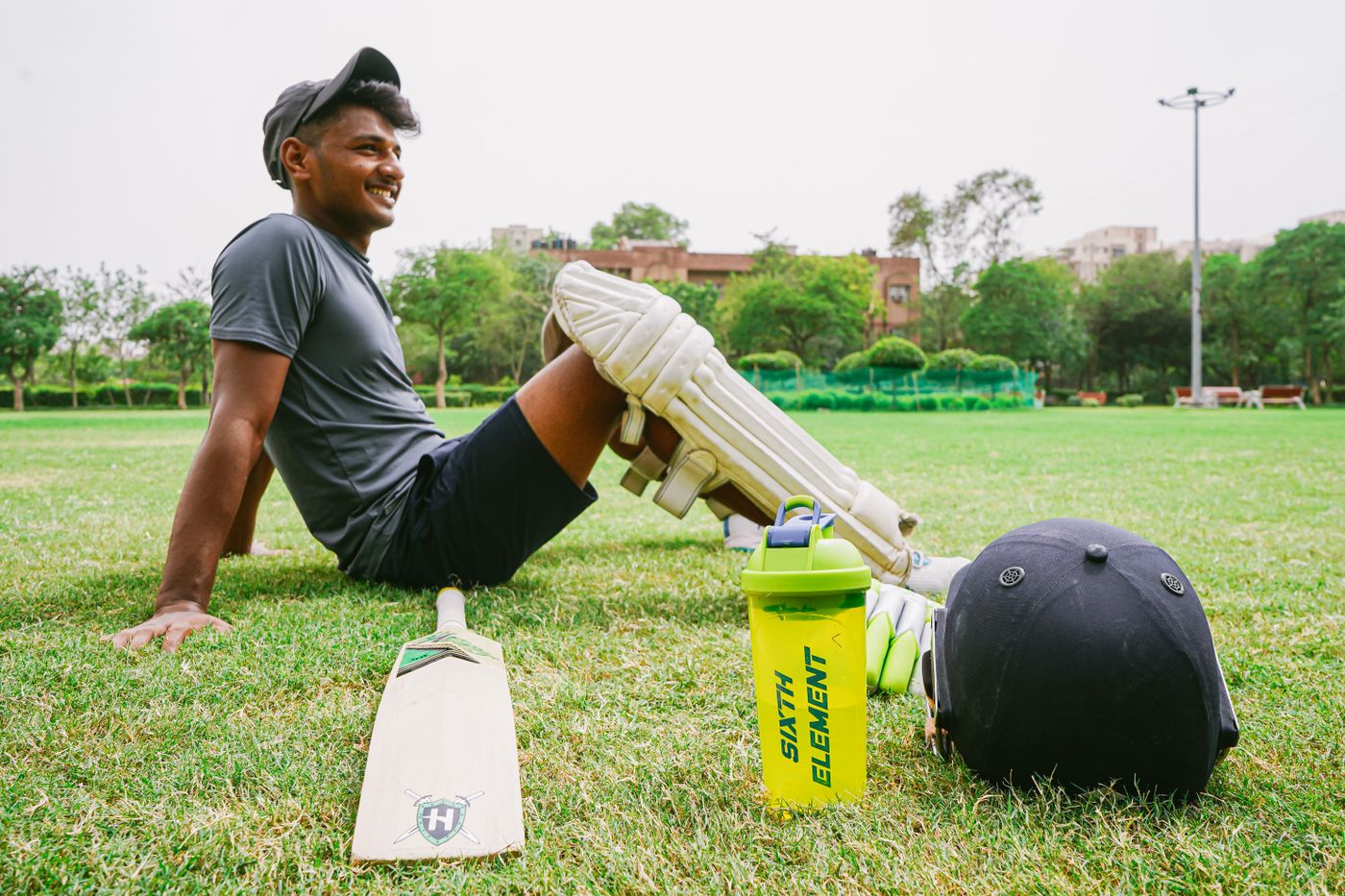
Choose cricket sunglasses for verified UV protection, clear vision and a secure sporting fit—not darkness alone. Look for lenses that meet a recognised sunglass standard, a close or wraparound frame, unobstructed peripheral vision, impact-resistant sports construction and grip that remains stable when sweating. Polarisation can reduce glare but does not itself prove UV protection. Test the glasses while looking upward, turning quickly and wearing a cap or helmet; the frame should not slide, pinch, fog excessively or hide a high ball.
Why cricket sunglasses need a sporting fit
Cricket sunglasses do more than make bright light comfortable.
A player may need to:
- track a high ball against the sky
- move from sun into shade
- turn quickly
- dive or slide
- look through the top and side of the lens
- wear a cap, wide-brim hat or helmet
- communicate without removing the glasses
Fashion sunglasses can provide good UV protection, but their fit, field of view and stability may not suit cricket.
The best cricket pair combines:
- verified UV protection
- clear, undistorted vision
- a lens tint suitable for the conditions
- secure grip during movement
- a frame that does not obstruct peripheral vision
- compatibility with the player’s other equipment
Start with UV protection
Lens darkness does not prove UV protection.
World Health Organization guidance says fully protective sunglasses should absorb UVA and UVB radiation to 400 nanometres, often marked UV400. New Zealand SunSmart guidance recommends close-fitting wraparound sunglasses that conform with the AS/NZS 1067:2016 sunglass standard.
When comparing a pair, look for:
- a recognised standard stated by the manufacturer
- UV400 or equivalent UVA and UVB protection
- a reputable product description rather than an unverified sticker
- coverage around the sides of the eyes
If the specification is unclear, ask the retailer or an optometrist. Do not infer protection from price, mirror coating or lens colour.
The WHO UV guidance and SunSmart New Zealand sunglasses guidance provide useful health context.
Polarised does not mean UV-protective
Polarised lenses reduce particular reflected glare.
That can help around:
- pale concrete
- bright roofs
- wet outfields
- nearby water
- low sun reflecting from hard surfaces
But polarisation and UV protection are different properties.
A lens can be:
- UV-protective but not polarised
- polarised and UV-protective
- dark without adequate verified UV protection
Check both specifications separately.
Polarised lenses can also change the appearance of some electronic screens. A scorer or coach who regularly checks a phone, tablet or electronic scoreboard should test the viewing angle before choosing them.
Lens tint: what changes?
Tint affects brightness, colour perception and contrast. It should not be chosen from appearance alone.
| Lens type | Typical use | Possible advantage | Watch for |
|---|---|---|---|
| Grey or smoke | Bright, open conditions | Reduces brightness with relatively neutral colour | Can feel too dark in late-afternoon shade |
| Brown or amber | Mixed light and contrast-focused use | Can increase perceived contrast in some backgrounds | Alters colour more than grey |
| Rose or copper | Variable light, contrast preference | Can make edges and contours feel more distinct | Strong colour shift; personal preference varies |
| Yellow or light-enhancing | Dull or overcast conditions | Brighter-looking view | Often unsuitable for strong sun; verify UV protection |
| Clear sports lens | Wind, dust or low light | Physical coverage without darkening | Must still meet the intended protective specification |
| Photochromic | Changing brightness | Adapts tint across conditions | Transition speed and final darkness vary; test real use |
| Mirrored coating | Strong brightness and cosmetic preference | Reflects some visible light | Coating alone does not prove UV protection |
No single colour is best for every player.
The useful test is whether the player can identify a ball quickly against:
- blue or white sky
- cloud
- trees
- sightscreen
- grandstand
- shaded boundary
Do not use a lens that makes ball colour or depth harder to judge.
Visible light transmission
Some manufacturers provide a visible light transmission percentage, often shortened to VLT.
A lower VLT generally means a darker lens. A higher VLT allows more visible light through.
VLT can help compare lenses, but it does not describe:
- UV protection by itself
- optical clarity
- fit
- peripheral coverage
- impact resistance
- fogging
- how the tint feels to one player
Use it as a brightness guide, not a complete quality score.
Frame shape and peripheral vision
Cricket demands vision above and to the side.
A thick upper rim in the wrong position can interrupt the view when the player looks up without moving the whole head. Deep side pieces can create a blind spot when scanning across the field.
Check peripheral vision by:
- putting the glasses on in normal playing posture
- keeping the head still
- moving the eyes up, down and toward both shoulders
- noticing any frame intrusion or lens distortion
- repeating while wearing the player’s cap or helmet
A wraparound frame can improve side coverage and stability, but it still needs a clear optical field.
Fit: the movement test
Try the glasses with dry skin and after light activity.
They should remain stable when the player:
- looks down
- looks straight up
- turns the head sharply
- jogs
- bends into a fielding position
- simulates a catch
- makes a diving movement safely on a soft surface
Watch for:
- sliding down the nose
- temples lifting away from the head
- pressure behind the ears
- eyelashes touching the lens
- frame contact with cheeks
- pinching at the nose
- movement when sweat appears
Rubberised nose pads and temple grips can help, but very soft components may wear or collect dirt. Replaceable parts are useful on a long-term sports frame.
Use with a cap or sun hat
Wear the exact headwear used in matches.
Check that:
- the cap does not push the frame downward
- the arms sit comfortably under the cap
- the brim does not force a head angle that obstructs high-ball tracking
- the glasses can be removed without dislodging the cap
- a retaining strap, if used, does not tangle with adjustment tabs
SunSmart protection involves more than sunglasses. A suitable hat, clothing, shade and sunscreen all have roles when UV levels require protection.
Use with a cricket helmet
Sunglasses worn under a helmet require a separate test.
Helmet fit and protection take priority. Do not alter padding or loosen the helmet to create space for eyewear.
Check:
- temple arms do not create pressure beneath the helmet
- the helmet remains correctly positioned
- the frame does not contact the grille during normal movement
- the glasses can be removed safely
- the lens does not fog immediately inside the helmet
- the frame cannot become a sharp pressure point
If eyewear changes helmet fit, choose a different frame or seek fitting advice.
Use our cricket helmet size and safety guide to establish correct helmet fit first.
Impact resistance and sports construction
UV protection does not equal impact protection.
Cricket involves a hard ball, thrown objects, equipment and falls. Ordinary sunglasses should not be described as protective sports eyewear unless they are tested and specified for that purpose.
Look for:
- manufacturer-stated sports use
- impact-resistant lens material
- secure lens retention
- smooth frame edges
- no cracked or brittle components
- a specification or standard appropriate to the intended use
Even purpose-built sports sunglasses are not substitutes for cricket helmets, face guards or other protective equipment.
Our complete cricket protective-equipment guide explains how each item has a separate job.
Prescription players
Players who need vision correction should not play in an incorrect prescription simply to use a sports tint.
Possible options include:
- prescription sports sunglasses
- prescription inserts
- contact lenses with non-prescription sports sunglasses
- clear prescription sports eyewear for low light
Each option affects peripheral vision, fogging, weight and cost differently.
An optometrist can help assess:
- prescription accuracy
- lens curvature
- optical distortion
- UV specification
- suitability for sport
- safe fit for a child
Do not copy another person’s prescription or continue using lenses when vision has changed.
Junior cricket sunglasses
A junior frame should fit the child now.
Oversized adult sunglasses can:
- slide during running
- sit too far from the eyes
- interfere with a cap or helmet
- create gaps at the sides
- feel heavy
- be removed repeatedly because they are uncomfortable
For a junior, check:
- bridge width
- temple length
- total frame width
- lens coverage
- stable fit without excessive tension
- simple handling
- a clearly stated UV specification
Teach the player to use a case rather than throwing the glasses into the main kit compartment.
Children should not be told that sunglasses make unlimited sun exposure safe. Follow the full SunSmart approach and local conditions.
Anti-fog design and ventilation
Fog forms when warm, moist air condenses on a cooler lens.
Cricket situations that encourage fogging include:
- wearing a helmet
- humid weather
- sweating after a run
- sudden movement from shade to sun
- standing still after intense activity
Helpful design features can include:
- controlled ventilation
- a frame that sits slightly away from the face without becoming loose
- hydrophilic or anti-fog lens treatment
- removable nose pieces that adjust airflow
Do not drill frames or apply household chemicals to lenses.
Use only cleaning and anti-fog products approved for the lens coating.
Retainers and straps
A retainer can reduce loss during dives or sudden movement.
It should:
- attach securely
- release or behave safely as designed
- not tighten across the throat
- not tangle with helmet or cap adjustments
- remain comfortable when looking upward
Test the full combination before a match. A strap that is useful for fielding without a helmet may be awkward under batting equipment.
Lens coatings
Common coatings include:
- anti-reflective
- hydrophobic
- oleophobic
- anti-fog
- mirror
- scratch-resistant surface treatment
Coatings can improve use and cleaning, but they can also be damaged by:
- abrasive cloth
- dry wiping dust
- household glass cleaner
- insect repellent
- sunscreen residue
- salt water
- high heat
Follow the maker’s care instructions. “Scratch-resistant” does not mean scratch-proof.
How to test cricket sunglasses before buying
The sky test
Look upward and scan slowly. Check for frame obstruction and distortion near the top of the lens.
The ball-colour test
View a red, white and pink cricket ball against likely backgrounds if possible.
The shade transition
Move between bright sun and pavilion shade. Notice whether the tint remains usable.
The sprint test
Jog, stop and turn. The frame should remain stable.
The sweat test
Try after light exercise where practical. Nose and temple grip can change when damp.
The equipment test
Wear the normal cap and helmet. Do not assume a pair that fits alone will fit with both.
The screen test
If using polarised lenses, view the phone, scoring tablet and any electronic display from several angles.
Care after play
- Rinse loose dust or salt away if the maker permits.
- Use the supplied microfibre cloth on a clean, dampened lens rather than grinding dry dust into it.
- Wash nose and temple contact areas as directed.
- Air-dry away from heaters and direct high heat.
- Store in a ventilated hard case.
- Keep the case outside the wet-shoe compartment.
Do not leave sunglasses loose beside spikes, keys, helmet grille or bat toe hardware.
If the kit was wet, use the wet cricket gear drying guide for the rest of the bag.
When to replace them
Replace or professionally assess sports sunglasses when:
- a lens is cracked
- the frame is distorted
- a lens repeatedly releases from the frame
- the coating is peeling in the field of view
- deep scratches affect tracking
- the fit has become loose
- a junior has outgrown the bridge or temple length
- the prescription is no longer correct
- UV or impact specifications cannot be confirmed after damage
Do not glue a cracked sports frame and assume its original performance is restored.
Common buying mistakes
Buying the darkest lens
Darkness and UV protection are not the same. A very dark lens may also be difficult in shade.
Treating polarisation as the whole specification
Polarisation controls glare. Verify UV protection separately.
Ignoring high-ball vision
A frame can feel comfortable while standing indoors but obstruct upward vision on the field.
Choosing one lens for every condition
Strong sun, overcast afternoons and evening cricket can require different visible-light performance.
Assuming any plastic lens is protective
Look for a real standard and manufacturer specification.
Testing without normal equipment
A cap or helmet can change fit completely.
Match-day checklist
- UV specification verified
- Lens clean and unscratched
- Frame and hinges undamaged
- Nose and temple grips secure
- Cap or helmet compatibility checked
- Retainer fitted safely if used
- Hard case packed
- Microfibre cloth packed
- Spare clear or alternative lens available if conditions may change
- Player can track the ball against sky and shade
The bottom line
The best cricket sunglasses are the pair the player can see through clearly, wear securely and trust in changing outdoor conditions.
Start with verified UV protection. Then assess lens tint, field of view, stability, impact specification and compatibility with a cap or helmet.
Do not buy from lens colour or styling alone, and do not let sunglasses replace the rest of the player’s sun-protection or cricket-protection system.