Cricket Neck Guard Guide: Standards, Helmet Fit and Replacement
Understand cricket neck protectors, the BS 7928:2013+A1:2019 label, helmet compatibility, fitting checks and when a guard should be replaced.
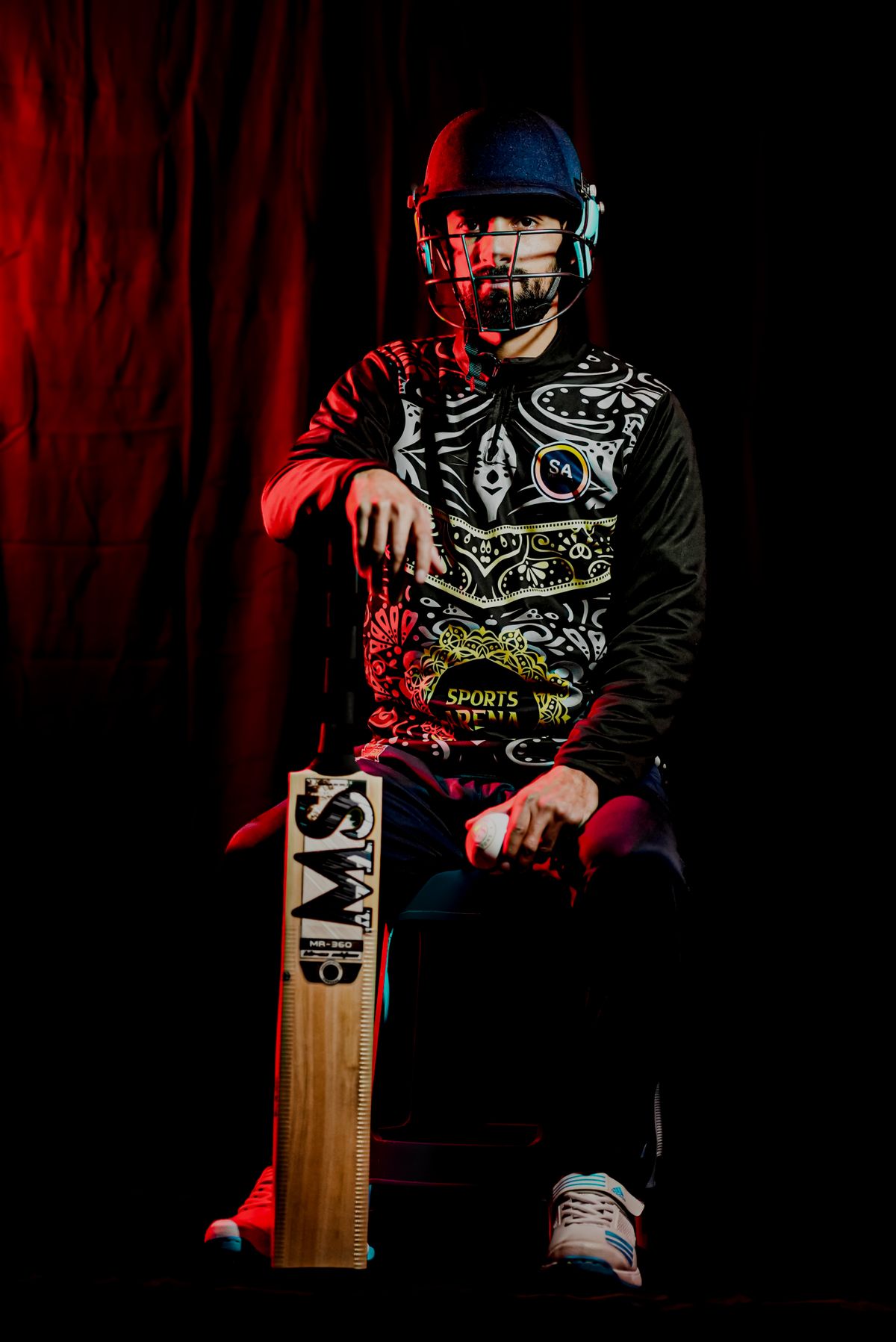
Use a neck protector that is compatible with the exact helmet model and is labelled as meeting BS 7928:2013+A1:2019. Fit it only as the helmet or protector manufacturer instructs, then check coverage at the rear base of the head, secure attachment, head movement and clearance from the shoulders. Do not drill, cut, bend or improvise attachment points. A neck protector reduces risk in a defined area; it does not make a player injury-proof or replace a correctly fitted compliant helmet. Follow the current rules for the player's competition, because requirements vary by level and governing body.
What is a cricket neck protector?
A cricket neck protector—often called a neck guard or stem guard—is fitted at the rear base of a batting helmet. It is intended to reduce the frequency and severity of localised injuries to the base of the back of the head and upper neck.
The guard works as part of a protective system. The system includes:
- the correct helmet shell and liner
- a correctly positioned faceguard or grille
- the helmet’s chin strap or retention system
- a compatible neck protector
- correct size and adjustment for the player
Adding a guard to an unsuitable, damaged or poorly fitted helmet does not make the system safe.
Why the standard matters
The relevant label to look for is BS 7928:2013+A1:2019. The 2019 amendment added specifications for neck protectors, including minimum coverage and impact-attenuation testing.
The ICC explains that compliant head protectors are tested separately against men’s and junior ball sizes. Packaging and labels should state the applicable ball-size testing.
Do not accept wording such as “protective style”, “compatible type” or “professional look” as evidence of compliance. Look for the full standard marking on the product, packaging or official technical information.
| Label or claim | What it tells you | What it does not tell you |
|---|---|---|
| BS 7928:2013 | The helmet standard before the neck-protector amendment | That a separate guard has passed the 2019 neck test |
| BS 7928:2013+A1:2019 | The amended standard includes neck-protector specifications | That every guard fits every helmet |
| “Fits most helmets” | A marketing compatibility claim | Exact tested combinations or correct fit |
| Manufacturer compatibility list | The guard is intended for named helmet models | That the helmet itself is the right size for the player |
Check both compliance and compatibility.
New Zealand rules: who must wear one?
The current NZC policy should be your starting point for NZC-administered representative and domestic competitions. NZC’s helmet policy requires a neck protector when national representative and Major Association representative players bat against fast or medium pace bowling. It also states that the helmet or protector must not be altered inconsistently with the manufacturer’s instructions.
That national policy is not automatically the rule for every club, school or community competition. Local associations, tournament organisers, schools and facilities may apply their own requirements.
Before a match or organised training block, confirm:
- which playing conditions apply
- whether the rule covers batting, wicketkeeping or close fielding
- whether it applies in practice as well as matches
- which standard and ball-size testing are required
- who checks compliance
Do not rely on what was accepted last season. Policies and product lists can change.
Players comparing helmets in New Zealand can also use this New Zealand cricket helmet buying guide as a practical retail reference, then verify the exact model and guard against the ICC list, current NZC policy and manufacturer instructions.
International and overseas context
Requirements vary.
- The ICC requires a compliant helmet when a player elects to wear one in international cricket; its equipment information lists compliant products and explains the amended neck-protector standard.
- Cricket Australia requires neck protectors for batters facing fast or medium pace in CA-sanctioned competitions and strongly recommends them in community cricket.
- The ECB recommends that a chosen neck protector meet BS 7928:2013+A1:2019 and sets separate mandatory rules in professional environments.
These examples show why a player travelling between competitions should check the specific rules rather than assume one policy applies everywhere.
Compatibility comes before appearance
A guard must attach to the helmet in the way its maker intended. Helmet shells, rear profiles, screw positions, clips and liners differ.
Before buying, record:
- helmet manufacturer
- exact model name
- helmet size
- approximate manufacture date or model generation
- existing rear attachment points
- whether the maker lists a dedicated guard
Use the helmet and guard manufacturers’ current compatibility information. If the model is absent, do not improvise.
Avoid:
- drilling new holes
- widening slots with a tool
- replacing specified fasteners with random screws
- cutting foam to clear a helmet edge
- gluing a guard to the shell
- combining parts from unrelated systems without approval
An attachment that looks secure in the changing room may release or move during an impact.
Choosing the correct size
Neck protectors may be sized separately from the helmet. The correct size provides the intended rear coverage without catching on the player’s shoulders or restricting normal batting movement.
Check the maker’s size chart first. Then fit the guard to the compatible helmet and place the helmet on the player.
Look for:
- coverage at the rear base of the head and upper neck
- even position behind the ears
- no large unintended gap caused by incorrect attachment
- no contact that pushes the helmet forward
- no edge digging into the neck
- no repeated collision with shoulder pads or upper clothing
- free, controlled rotation of the head
Do not choose a larger guard simply because more material appears safer. An oversized component can catch on the shoulders and alter movement. The right choice is the smallest size that achieves the manufacturer’s intended coverage and clearance.
Fit the helmet first
The helmet must fit before the guard is judged.
A basic sequence is:
- Measure the player’s head as directed by the helmet maker.
- Fit and adjust the helmet without the guard.
- Check stability, comfort and faceguard position.
- Confirm the helmet’s standard label and ball-size testing.
- Attach the compatible neck protector according to the instructions.
- Repeat the complete fit and movement check.
If adding the guard makes the helmet tilt, lift or move, stop. The combination needs reassessment.
Our cricket helmet size and safety guide explains the underlying helmet fit checks.
A safe fitting check
Follow the maker’s instructions exactly; the steps below are a verification routine, not a replacement for them.
1. Inspect every component
Check the shell, liner, grille, straps, rear fittings, protector body, clips and fasteners. Do not fit a new guard to a helmet that has damage or missing parts.
2. Identify the correct attachment points
Use only the designed positions. Compare the physical helmet with the current diagram or video supplied for that model.
3. Attach without modification
Use the specified clips, screws or fittings. Tighten only as directed. Over-tightening can damage components; under-tightening can allow movement.
4. Check symmetry and engagement
The protector should sit evenly and all clips or fasteners should be fully engaged. Pull gently only in the manner recommended for the product check.
5. Put the helmet on
Fasten the chin strap and adopt a normal batting stance. The player should look forward, down, left and right without the helmet shifting.
6. Add batting clothing
Repeat the movement check with the shirt, helmet and any upper-body protection used in play. Shoulder and chest guards can change clearance.
7. Recheck before use
Confirm that nothing loosened during the movement test.
If any part seems uncertain, ask the retailer, helmet maker or appropriately qualified equipment specialist before use.
Movement checks for a batter
Do the checks in a safe area without a live ball.
The player should be able to:
- take guard and look toward the bowler
- turn the head toward square leg and point
- look down at the crease
- lift the chin without the guard levering the helmet
- rotate through a shadow pull or hook movement
- bend into a short-ball evasion position
- call and look toward a partner
The guard may be noticeable, especially on first use, but it should not repeatedly strike the shoulders, push the helmet upward or obstruct essential vision.
Do not remove or alter it because it feels unfamiliar. Recheck size, installation and compatibility.
Introduce it in practice
A correctly fitted protector still deserves familiarisation.
Use this progression:
- wear the complete helmet for five to ten minutes off the field
- complete shadow strokes and running calls
- use controlled throwdowns with a suitable ball
- progress to normal net practice under supervision
- recheck attachment after the session
This lets the player notice any shoulder contact, strap movement or pressure point before match day.
For a junior player, the supervising adult should understand how the guard attaches and how to recognise a loose or incompatible fit. Do not leave the setup entirely to the child.
What a neck protector cannot do
No helmet or guard can prevent every serious injury.
A neck protector:
- covers a defined rear area, not the whole neck
- reduces impact effects under specified test conditions
- cannot control every ball angle, speed or secondary contact
- cannot compensate for an incorrect helmet size
- cannot make unsafe training organisation acceptable
- may be damaged by an impact even when damage is not obvious
Risk reduction still includes appropriate bowling speeds, safe net organisation, suitable supervision, clear waiting zones and correct protective equipment for the role.
Pre-session check
Before every match or net:
- confirm the correct player and helmet size
- inspect the guard for cracks, compression or deformation
- check all clips, screws and fittings
- confirm the protector is centred
- fasten the chin strap
- test head movement
- check shoulder clearance with batting clothing
- confirm current competition requirements
- keep the manufacturer’s instructions available
If a fitting is loose or a part is missing, take the helmet out of service until it is correctly repaired or replaced.
After an impact
The ICC warns that a severe blow can damage a head-protector component even when damage is not visible. Treat a significant strike seriously.
After a blow to the helmet or guard:
- follow the competition’s medical and concussion procedure
- do not let an equipment check delay care for the player
- remove the helmet from use
- record where the impact occurred
- inspect the complete system under the maker’s guidance
- contact the manufacturer or qualified specialist when required
- replace affected components as instructed
Do not bend a guard back into shape or continue because the surface looks normal.
Our helmet replacement guide covers post-impact decisions in more detail.
Cleaning and storage
Sweat, sunscreen and dust collect around the rear liner and protector.
Follow the manufacturer instructions. A general routine is:
- remove loose dirt with a soft cloth
- use only permitted mild cleaning products
- avoid solvents, bleach and abrasive pads
- dry naturally away from strong heat
- store the helmet where the guard cannot be crushed
- keep fasteners and instructions with the helmet
Do not leave a protected helmet loose at the bottom of a kit bag. Pack it where heavy items cannot deform the guard or press the grille.
The CricketWise helmet, pad and glove cleaning guide provides a wider kit-care routine.
When to replace the guard
Replace or obtain specialist advice when:
- it has taken a significant impact
- the body is cracked, cut or deformed
- foam remains compressed
- clips or screw points are worn
- attachment repeatedly loosens
- the compatible helmet has been replaced
- the maker withdraws compatibility
- labels are missing and compliance cannot be verified
- the component is beyond its stated service life
Do not transfer an old guard automatically to a new helmet. Recheck the exact combination.
Buying checklist
- Full BS 7928:2013+A1:2019 marking
- Listed compatibility with the exact helmet model
- Correct size for the player
- Intended coverage without shoulder interference
- Original fasteners and instructions included
- Clear replacement and post-impact guidance
- Retailer or manufacturer support available
- Current competition rules checked
- Ball-size testing of the complete helmet understood
Avoid second-hand guards with unknown impact history. A low price does not compensate for missing provenance or damaged fittings.
Club and school equipment control
Shared helmets need a stricter system.
Record:
- helmet model and size
- guard model and size
- standard labels
- purchase date
- compatible combination
- inspection date
- impact history
- status: in service, quarantined or retired
Keep each guard attached to its verified helmet where possible. If components are removed for cleaning, use labelled bags so parts are not mixed.
Coaches should know the current policy and the stop-use rule. A player should never feel pressured to use a loose, damaged or incompatible setup because practice has already started.
Common mistakes
Buying the guard before identifying the helmet
Compatibility is model-specific. Start with the helmet label.
Confusing helmet compliance with guard compliance
A BS 7928:2013 helmet label does not by itself prove that an added guard meets the 2019 amendment.
Altering the attachment
Drilling, cutting, gluing or substituting hardware can change performance and breach policy.
Choosing the largest size
Excess material may catch on the shoulders. Use the maker’s size and coverage method.
Ignoring an impact
Invisible damage is possible. Remove the system from use and follow the post-impact instructions.
Assuming one rule covers all cricket
NZC domestic, international, overseas, school and community requirements may differ. Check the actual competition.
The bottom line
A neck protector is a tested component of a correctly fitted helmet system, not a universal clip-on accessory. Look for BS 7928:2013+A1:2019, confirm exact helmet compatibility, fit it without modification and check coverage, attachment and movement every time. After a significant impact, prioritise the player’s medical pathway and remove the equipment from use for assessment.
Sources and further reading
- New Zealand Cricket: Playing Conditions and Policies
- ICC: Helmets or Head Protectors
- ECB: Recreational Cricket Safety Guidelines
- Cricket Australia: Head and Neck Protectors
This is general equipment guidance. Follow the current rules, medical protocols and manufacturer instructions that apply to the player, helmet, competition and venue.