Cricket Abdominal Guard Guide: Fit, Supporters and Replacement
How a cricket abdominal guard should fit, which supporter styles hold it securely, and when a damaged or outgrown protector needs replacing.
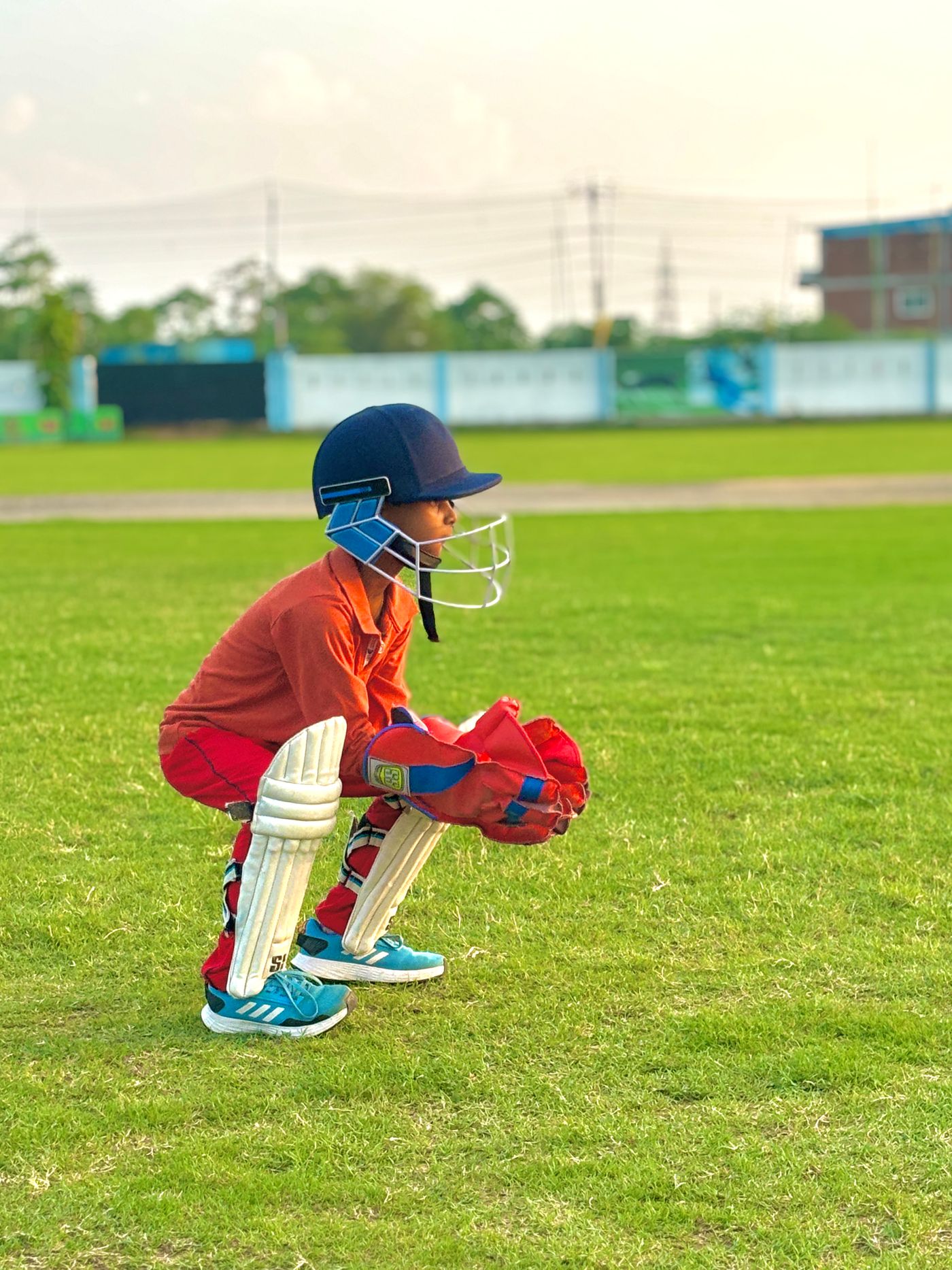
A cricket abdominal guard should cover the vulnerable groin area, sit close to the body in a compatible supporter or compression garment, and stay centred through batting, running and crouching. It must not dig into the body or shift during movement. Replace it if the shell is cracked, badly scuffed, distorted, outgrown or no longer held securely.
What an abdominal guard is for
A cricket abdominal guard—often called a groin protector or box—is a rigid protective shell worn over the groin. It is one part of a wider protective system for hard-ball cricket.
The ECB’s recreational safety guidance describes a groin protector as vital protective equipment for the groin and genital area. The exact rules vary by age, role and competition, but the physical principle does not: the shell must cover the intended area and stay in place before, during and after impact.
A guard carried in a kit bag provides no protection. A loose guard that moves away from the body is not fitted correctly.
Who normally wears one?
Abdominal guards are most commonly used by male batters and wicketkeepers in hard-ball cricket, and by some close fielders depending on position and risk. Pelvic protectors made for different anatomy are also available; use the protector designed for the player’s body and role rather than forcing a generic shell to fit.
For juniors, parents and coaches should check the current competition rules. The ECB’s safety framework, for example, links mandatory groin protection for under-18 male players to circumstances where head protection is required. New Zealand teams must follow their own association and competition requirements.
Even where a rule is framed as a recommendation, a risk assessment still matters. Ball hardness, pace, distance, skill, role and supervision all change the exposure.
The four parts of a correct fit
A correctly fitted guard needs all four of these:
- Coverage: the rigid shell covers the vulnerable area.
- Close position: the guard sits close enough that it cannot accelerate into the body.
- Stable support: the garment or supporter holds it centred.
- Unrestricted movement: the player can run, bend, crouch and bat normally.
A bigger shell is not automatically safer. An oversized guard can catch on the thighs, tilt or move inside the supporter. A small guard may leave part of the area exposed.
Guard sizes are not universal
Manufacturers commonly use labels such as small junior, junior, youth, small adult and adult. Those names are not a common measurement standard.
Use the size guide supplied with the exact guard or supporter. Treat age only as a starting point. Players of the same age can have very different builds, and a child can outgrow the supporter before the shell looks obviously small.
When possible, buy the shell and supporter as a compatible system. A guard that fits one pocket may rock or sit too high in another.
Supporter brief, jockstrap or compression short?
The shell needs a garment that keeps it in the correct position.
| System | How it works | Useful for | Watch for |
|---|---|---|---|
| Supporter brief | Close-fitting brief with a shaped pocket | Simple match and training use | Loose waist or stretched pocket |
| Jockstrap-style supporter | Straps and front pocket hold shell close | Minimal layers and firm support | Incorrect strap tension or chafing |
| Compression short with guard pocket | Stretch short holds shell inside a pocket | Players who prefer thigh coverage and a stable base layer | Pocket too large, fabric worn thin |
| Integrated protective short | Purpose-built garment may carry several guards | Players combining groin and thigh protection | Bulk, heat and correct alignment of each component |
Ordinary loose underwear is not a substitute for a proper supporter. The guard should not float inside shorts or rely on the trousers to keep it centred.
Step-by-step fitting check
1. Start with the manufacturer’s instructions
Confirm which side faces the body, the intended orientation and the compatible pocket. Inspect the edge padding and shell before use.
2. Fit the supporter first
The waistband should be firm without restricting breathing or leaving deep pressure marks. The garment should not sag when the player moves.
3. Insert and centre the guard
Seat the shell fully in the pocket. The narrow end usually points down, but the specific product instructions take priority. Centre it over the intended area and make sure it is not rotated.
4. Check coverage
Standing normally, confirm that the rigid area covers the vulnerable region. The edge should not sit directly on a sensitive point.
5. Move through cricket positions
With normal training clothing over the supporter, ask the player to:
- walk and jog
- take a batting stance
- stretch into a forward defence
- play a controlled cross-bat movement
- bend to ground the bat
- crouch in a wicketkeeping position if relevant
- turn and complete a short run
The shell should remain centred. It should not rattle, tip forward, ride up or slide to one side.
6. Recheck after movement
Do not assume the starting position stayed correct. Check again after the movement test and after the first few minutes of a session.
How tight should it feel?
Secure is not the same as painfully tight. The guard needs to stay close, but the edge should not pinch, dig into the thighs or create numbness.
If the shell only stays in place when the supporter is uncomfortably tight, the shell and pocket may be incompatible. Try the correct size or a different support system.
If the player cannot move naturally, the equipment may create a new problem. Protective gear must work in the actual batting or keeping position, not only while standing upright.
Junior fitting and communication
Use clear, matter-of-fact language. Explain what the protector is for and give the child privacy to adjust it.
A parent or coach can supervise the fitting process without unnecessary touching. The player should learn to say when the guard has shifted, feels painful or no longer fits.
Build the guard into the same pre-session routine as pads, gloves and helmet:
- put it on before the rest of the lower-body equipment
- check the supporter and shell
- move through a stance and run
- recheck after breaks
- dry it before returning it to the bag
New Zealand Cricket’s Transition to Hard Ball material emphasises confidence and familiarity with protective equipment. A gradual introduction with controlled feeds is better than giving a child new equipment immediately before fast bowling.
Our junior cricket gear checklist places the guard within the full first-kit system.
Batting, wicketkeeping and close fielding
Batting
The guard must remain stable through lunging, turning and running. Check that batting-pad straps and thigh protection do not pull the supporter out of position.
Wicketkeeping
A keeper repeatedly moves between upright and deep crouched positions. The lower edge must not dig into the body in a crouch, and the shell must not ride up as the keeper rises.
The cricket net safety checklist covers role control, hard-ball progression and equipment checks for practice sessions.
Close fielding
Use the competition’s rules and a role-specific risk assessment. A guard does not replace head, chest or other protection required for a close position.
When to replace an abdominal guard
Replace the protector if you find:
- a crack, split or puncture in the shell
- a deep gouge or crushed area
- distortion that stops it sitting flat
- damaged edge padding
- sharp or exposed edges
- a shell that has become brittle
- an impact after which the product instructions require replacement
- a guard the player has outgrown
- a pocket or supporter that no longer holds it securely
You cannot prove internal performance from appearance alone. If the guard has taken a severe impact or its condition is uncertain, follow the manufacturer’s replacement guidance and err on the side of replacement.
Support garments also wear out. Stretched elastic, torn stitching and enlarged pockets can make a sound shell unstable.
Cleaning and storage
Remove the rigid guard from the supporter after use if the product is designed for removal. Wipe the shell according to the manufacturer’s instructions and let it dry completely.
Wash the supporter separately at the recommended temperature. Do not return a damp guard to a closed kit bag.
Avoid:
- boiling water
- strong solvents
- leaving the guard on a heater
- long periods in a hot car
- placing heavy kit on top of it
- sharing an uncleaned guard
The guide to cleaning pads, gloves and helmets explains the same dry-before-storage principle for the rest of the kit.
Common mistakes
Buying by age alone
Age labels are convenient, not definitive. Check the exact manufacturer’s fit guidance and test movement.
Wearing the guard loose in trousers
Without a compatible supporter, the shell can move away from the intended area.
Choosing a size to “grow into”
Oversized protection can shift or interfere with movement. Replace it as the player grows.
Checking only while standing
Batting and keeping use wide stances, deep flexion and rotation. Test those positions.
Leaving it in the bag between sessions
Sweat and moisture degrade comfort, hygiene and support garments. Remove, clean and dry it.
Treating the box as the whole safety system
A guard protects a specific region. Hard-ball training may also require a helmet, gloves, pads and additional protection. See the complete cricket protective-equipment guide.
Buying checklist
Before choosing a protector:
- Designed for the player’s anatomy and cricket role
- Correct current size, not a future “grow into” size
- Manufacturer’s size guide checked
- Compatible supporter or compression pocket identified
- Shell edges smooth and padded as designed
- Player can bat, run and crouch without shifting
- Support garment remains firm after washing
- Replacement instructions understood
New Zealand players comparing compatible shells, supporters and related guards can review current cricket protective-gear options. Use the manufacturer’s instructions and a movement test to make the final choice.
Match-day check
- Shell free from cracks or distortion
- Supporter elastic firm
- Pocket stitching sound
- Guard fully inserted and centred
- Coverage checked
- Batting or keeping movement completed
- No pinching, numbness or sharp edge
- Spare supporter available for multi-day or wet conditions
- Guard removed and dried after play
Sources and further reading
- ECB Recreational Cricket Safety Guidelines
- ECB Recreational Cricket Safety Regulations
- New Zealand Cricket: Transition to Hard Ball coaching manual
The applicable competition rules and the manufacturer’s instructions take priority. If a player has pain, an injury concern or uncertainty after an impact, stop play and seek appropriate medical advice.